Process Mapping Software for Small Businesses: What Actually Matters
Every small business I've consulted for has processes that exist only in one person's head. The onboarding flow, the refund exception rule, the way invoices get approved past a certain dollar amount — none of it is written down, and all of it walks out the door when that person takes a vacation or quits. Process mapping software for small business isn't about impressing anyone with a fancy diagram. It's about getting that knowledge out of one person's head and into a shared, visual reference the rest of the team can actually use.
Quick answer
The best process mapping software for a small business is whichever tool your team will actually keep updated — usually one with a low learning curve, easy client or team sharing, and a price that scales with a handful of active editors rather than every viewer. For most small teams under 20 people, that means a general diagramming tool with swimlane support rather than an enterprise BPMN suite.
What "process mapping software" actually needs to do for a small team
Enterprise process mapping tools are built for governance: version control across hundreds of processes, compliance audit trails, integration with process-mining data. A 12-person agency does not need any of that. What it needs is:
- A way to draw a clear flow with decision points and handoffs between people.
- A way to share that flow with the people who actually do the work, without a steep login process.
- A place for that flow to live where someone will actually see it again.
Most process mapping failures I've seen in small businesses aren't tool failures — they're maintenance failures. Someone maps the onboarding process during a slow week, it's accurate for two months, then the process changes and the map doesn't. The Small Business Administration's guidance on standard operating procedures makes the same point about documentation generally: a document that isn't tied to a living workflow goes stale fast.
What matters, ranked
1. Time to first useful map
If it takes more than 20 minutes to produce a map a non-technical teammate can read, most small teams give up. Test this before buying: map your actual onboarding process in the trial, not a demo template.
2. Swimlane support
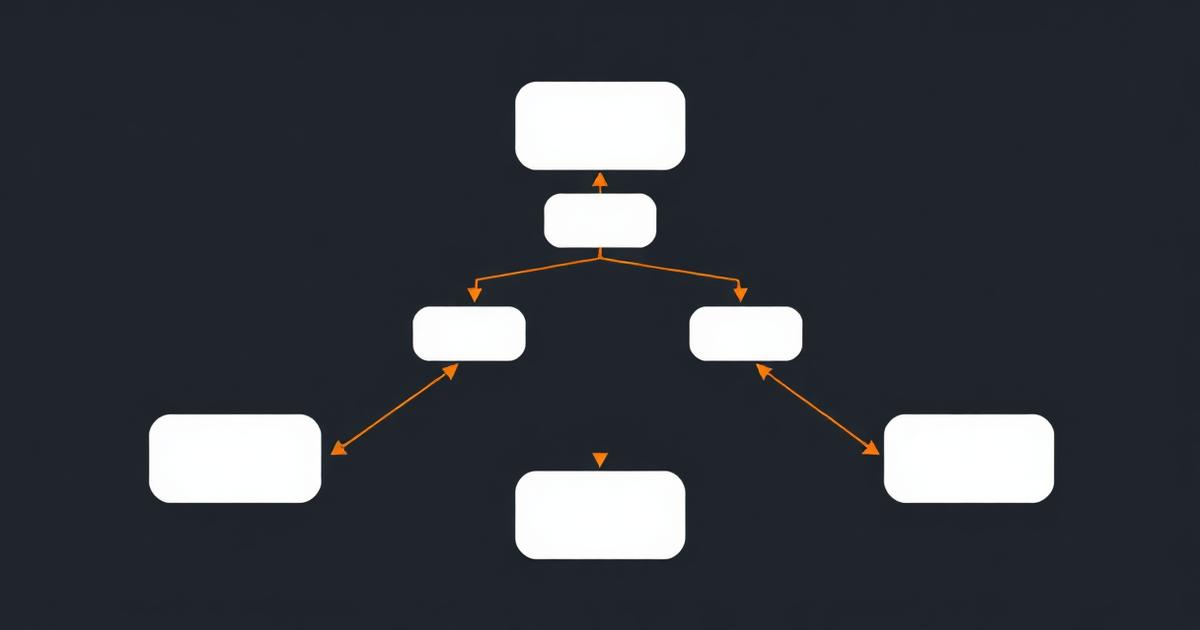
Cross-functional handoffs are where processes actually break — the moment a deal moves from sales to onboarding, or a support ticket escalates from tier one to a manager. A swimlane diagram makes exactly this kind of handoff visible, showing which lane (role or department) owns each step.
3. Sharing model that fits how you work with clients
If your processes get shared with clients — onboarding checklists, delivery timelines — you want a sharing model that doesn't require the client to create an account. A link-based, view-only share with no signup wins here every time over an invite-based collaboration model built for internal teams.
4. Pricing that doesn't punish viewers
Watch for per-editor vs. per-seat pricing. If ten people need to occasionally view a process map but only two ever edit it, per-editor pricing (like Lucidchart's) can actually be cheaper than flat per-seat pricing. Do this math with your actual team composition before assuming either model is better.
5. Where the map lives after it's made
A process map that lives in a diagramming tool disconnected from your task management or CRM tends to be forgotten. If the same platform holds your client records and your tasks, a linked process map gets referenced naturally during actual work, not just during the mapping workshop.
Comparison table
| Tool | Best for | Learning curve | Client sharing | Starting price |
|---|---|---|---|---|
| EvronStudio | Small teams wanting maps tied to client/task records | Low | Branded portal link, no signup | Free tier, paid from ~$12/user/mo |
| Lucidchart | Precision diagrams, larger orgs, ERD/network diagrams | Moderate | Link or full collaborator invite | Free tier, paid from ~$9/editor/mo |
| draw.io | Free, simple flowcharts, offline use | Low | Export only, no built-in sharing | Free |
| Miro | Workshop-style mapping sessions | Low-moderate | Guest link | Free tier, paid from ~$8/user/mo |
| Bizagi | Formal BPMN process governance, larger operations | High | Enterprise-focused sharing | Custom/enterprise pricing |
Bizagi and similar dedicated BPMN suites are the right call once you have a compliance requirement or a process-governance team — genuinely stronger for that job than any tool on this list. Below that scale, the extra notation rigor mostly adds friction without adding value.
A simple rollout plan for a small team
- Pick the one process that causes the most repeated questions — usually onboarding or a refund/exception flow.
- Map it with the person who actually does the work, not just a manager's assumption of how it works.
- Add swimlanes for every role that touches the process.
- Share it with the team as a read-only link and ask for corrections within a week.
- Revisit it every quarter, or whenever the process visibly breaks.
How this connects to the rest of your stack
Process mapping rarely stands alone. The process you're mapping usually touches your customer journey, your sales pipeline, and your onboarding checklist. If those all live in separate tools, you'll end up maintaining the same information three times. This is the practical argument for an all-in-one workspace over a pile of point solutions — not because any single tool in the pile is bad, but because the maintenance tax of keeping five tools in sync compounds every quarter you run the business.
If you're a two- or three-person team, honestly, a shared doc and a whiteboard might be enough for another year. Buy process mapping software when the cost of tribal knowledge — the "only Sarah knows how this works" problem — becomes bigger than the cost of the tool.
Frequently asked questions
- What is process mapping software?
- It's software for drawing and maintaining visual diagrams of how work actually flows through a business — who does what, in what order, and what happens when something goes wrong. It ranges from general diagramming tools to dedicated BPMN suites.
- Do small businesses need dedicated process mapping software?
- Not always. A business with two or three simple processes can get by with a shared doc and a whiteboard. Once you have five or more processes that touch multiple people, or you're onboarding new hires regularly, dedicated software pays for itself in reduced tribal-knowledge risk.
- What's the difference between process mapping and workflow automation software?
- Process mapping shows how work is supposed to flow, as a visual reference for humans. Workflow automation actually executes steps — sending emails, updating records, assigning tasks. Many teams need mapping first to agree on the process before automating any of it.
- How much should a small business spend on process mapping software?
- Most small teams do well in the $10 to $30 per user per month range for a tool that also handles adjacent needs like tasks or client sharing. Dedicated BPMN suites built for enterprise process governance often start well above that and are usually overkill below 20 employees.
- Can I do process mapping in a free tool?
- Yes, for simple flowcharts. draw.io and EvronStudio's free tier both handle basic process maps at no cost. Free tiers usually hit limits on board count, collaborator seats, or client sharing once the practice matures.
About the author
James Whitfield writes for EvronStudio on diagramming & boards for small B2B teams. Meet the editorial team.
Keep reading
Swimlane Diagram Maker: Map Who Does What, When
A swimlane diagram maker built for cross-team handoffs, not enterprise BPMN. See how to build one, real examples, and tools compared honestly.
Diagramming & BoardsSales Process Flowchart Templates You Can Copy Today
Ready-to-copy sales process flowchart templates for B2B teams: outbound, inbound, and enterprise deal cycles, with what to customize.
Diagramming & BoardsFree Online Org Chart Maker (Build One in 5 Minutes)
Build an org chart in minutes with a free online org chart maker. No design skills needed — see the fastest method and where free tools hit limits.