Task Delegation Software: Assign, Track, Actually Follow Up
Delegation fails less often because someone forgot to assign a task and more often because nobody checks back until the deadline has already passed. Task delegation software's real job isn't tracking who owns what — most tools do that fine. Its real job is making follow-up happen automatically instead of depending on a manager remembering to check.
Quick answer
Task delegation software assigns work to specific people and, critically, surfaces overdue or at-risk tasks to the delegator without them needing to manually check in. The best implementations use digest-style overdue alerts rather than real-time pings, and support clear escalation when a delegated task stalls.
Why delegation breaks down even with a task tool in place
I've audited task boards at client companies where every task has a clear assignee and due date, and delegation still fails constantly. The pattern is almost always the same: the manager delegates, moves on to other work, and doesn't look again until the deadline arrives — at which point it's too late to course-correct if something's off track. The task tool recorded the assignment correctly. It just didn't surface the moment something needed attention earlier than the deadline.
What good delegation tooling actually does differently
Surfaces risk before the deadline, not at it
A task due Friday that hasn't been touched by Wednesday is a different signal than one updated yesterday. Tools with activity tracking (last updated, comments, subtask progress) can flag "stalled" tasks days before they'd otherwise show as simply overdue. This is the single most useful delegation-specific feature to look for, and it's often missing from tools built primarily as personal to-do lists rather than team coordination tools.
Uses digests, not real-time interruption
Real-time Slack pings for every overdue task train people to mute the channel within a month. A daily or twice-weekly summary — "these three delegated tasks are at risk" — gets read and acted on because it doesn't compete with everything else demanding immediate attention. I've watched teams switch from real-time to digest-style alerts and see follow-through improve, not because the information changed, but because it stopped being ignorable noise.
Makes status visible without requiring a check-in message
The delegator should be able to open a dashboard and see progress without sending "how's this going" — that message itself is often what delegation software is meant to eliminate. If checking status still requires a conversation, the tool isn't doing its job.
Comparison table
| Approach | Follow-up mechanism | Risk of ignored alerts | Best for |
|---|---|---|---|
| Manual check-ins (chat/email) | Delegator remembers to ask | High — depends entirely on memory | Very small teams, ad hoc work |
| Real-time overdue notifications | Instant ping on missed due date | High — alert fatigue sets in fast | Rarely recommended as sole method |
| Digest-style overdue summary | Scheduled daily/weekly summary | Low to moderate | Most small to mid-size teams |
| Stalled-task detection (activity-based) | Flags before deadline based on inactivity | Low | Teams delegating complex, multi-step work |
Writing delegatable tasks in the first place
No tool fixes a task that says "handle the client thing." Specificity at assignment time does more for delegation success than any software feature. A delegatable task names the outcome, the deadline, and what "done" looks like specifically enough that the assignee doesn't need to guess. This overlaps heavily with prioritization clarity — see how to prioritize tasks at work for frameworks that also sharpen how tasks get written, not just ordered.
Rotating and recurring delegation
Delegated work that rotates — "whoever's on client-check-in duty this week" — is a common gap in task tools that otherwise handle delegation well. Many require manually reassigning each recurring occurrence, which quietly reverts to a manual process exactly where automation would help most. If this describes your team, check this specifically against recurring tasks software capabilities before assuming a tool covers your rotation pattern.
Where EvronStudio fits
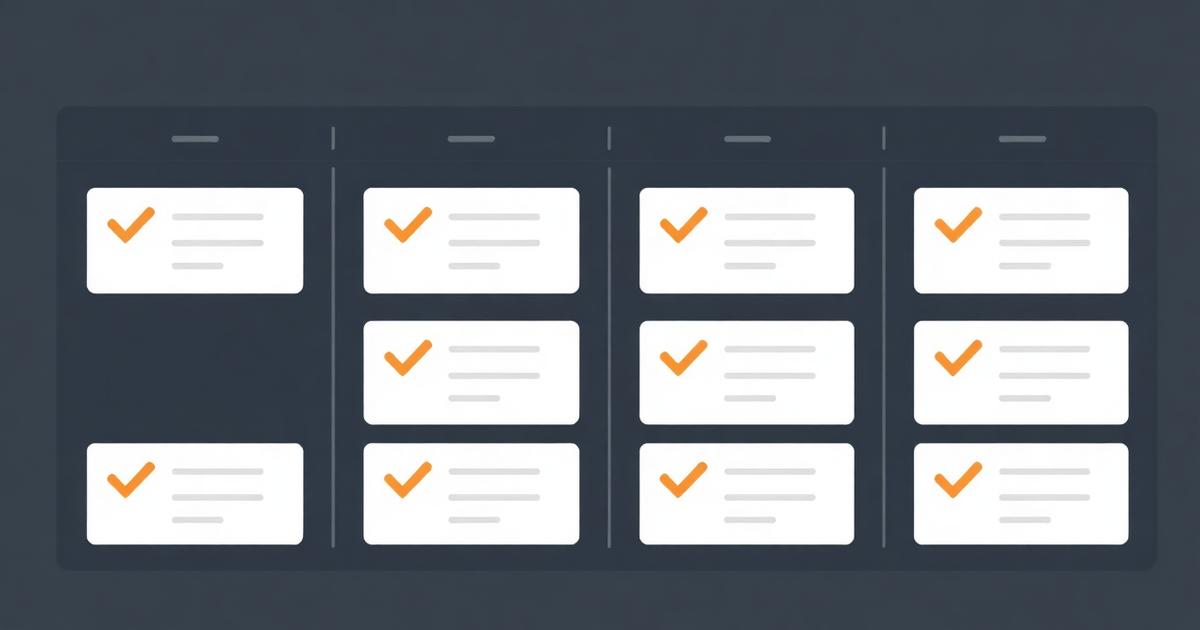
EvronStudio's task views group by assignee and surface last-activity timestamps, so a manager scanning a dashboard can spot a stalled task before it's technically overdue. Because tasks are tied to client and project records, delegation for client work specifically benefits — a manager can see delegated tasks per client without cross-referencing a separate system. It doesn't yet have a dedicated activity-based "at risk" scoring algorithm the way some enterprise-focused platforms do; for most small teams, visible last-updated timestamps and due-date filtering cover the actual need. See team task tracker with deadlines and all-in-one CRM and project management for the broader setup this fits into.
Harvard Business Review's research on effective delegation consistently finds that the biggest predictor of delegation success isn't the assignee's competence but the clarity of the initial ask and the presence of a defined check-in point — which is exactly what good delegation software should support structurally rather than leave to memory. Get those two things right, in the tool or out of it, and delegated work stops being the thing that quietly slips.
Frequently asked questions
- What makes task delegation software different from basic task assignment?
- Basic assignment just tags who owns a task. Real delegation software adds follow-up structure — overdue alerts, escalation paths, visibility for the delegator without needing to ask, and a clear record of what was delegated and when, so accountability doesn't rely on memory.
- Why do delegated tasks often fail even with software in place?
- Usually because the delegator doesn't check in until the deadline has already passed, or the task itself wasn't specific enough to act on. Software can surface overdue items early, but it can't fix a vaguely written task — that's a delegation skill problem, not a tooling problem.
- Should managers get notified immediately when a delegated task is overdue?
- Immediate notification on every overdue task creates alert fatigue and managers start ignoring them. A daily or twice-weekly digest of overdue items, rather than real-time pings, tends to get more actual follow-through in practice.
- Can task delegation software help with recurring delegated work, like rotating responsibilities?
- Yes, if it supports recurring tasks with rotating assignees. This is a common gap — many tools handle simple recurrence well but require manual reassignment each cycle if the person responsible changes on a schedule.
- Is task delegation software worth it for a five-person team?
- Often yes, surprisingly early. Delegation problems show up as soon as one person manages even two or three others' work, and a simple assignee-plus-due-date view solves most of it well before you need heavier project management features.
About the author
Claire Bennett writes for EvronStudio on task management for small B2B teams. Meet the editorial team.
Part of our guide to Task Management Software for Small Teams: A No-Bloat Guide.
Keep reading
Running Client Work on a Kanban Board (Setup + Template)
How to set up a kanban board for client work that scales past a handful of clients, with a column template and common failure points.
Task ManagementTo-Do List vs Task Manager: When a List Stops Being Enough
To-do list vs task manager: what actually separates them, and the signs your team has outgrown a simple checklist app.
Task ManagementThe Best Task Management Tools in 2026, Ranked
An honest ranking of the best task management tools in 2026 — pricing, best-fit team size, and where each one falls short.